

Getting a new garage door? Before you focus entirely on the color, panels, and design, there is one small detail worth checking: the garage door bottom seal. It may not be the most exciting part of your new door, but it makes a difference every time the door closes. A poorly fitted seal can leave gaps where dust, cold air, insects, and rainwater enter your garage.
For homeowners in Valley Village, CA, November brings cooler evenings and occasional rain. Even a small gap beneath the door can become noticeable when the weather changes.
So, how do you choose the right seal? The answer depends on the seal’s shape, how it attaches to your door, and how evenly your garage floor meets the bottom edge. Here is what you should know before your new garage door installation.
Why the Right Garage Door Bottom Seal Matters
A garage door bottom seal creates a flexible barrier between the bottom panel and the concrete floor. When the door closes, the seal compresses slightly to help block outside elements. For homes around Valley Village Park, Studio City, and North Hollywood, this can be particularly helpful when dry weather brings dust into the driveway or seasonal rain leaves moisture near the garage entrance.
However, not every garage door rubber seal works with every door. Some seals fit into metal channels, while others use different attachment shapes. A seal that is too thin may leave gaps. One that is too bulky may compress poorly or interfere with proper door closure.
The goal is not to find the thickest seal available. You need one that matches your door and makes consistent contact with the floor.
Step 1: Understand the Different Garage Door Bottom Seal Types
Before choosing a seal, it helps to understand the common designs. Garage door seal types differ in how they attach and how their flexible sections contact the floor.
Here are the options homeowners are most likely to encounter:
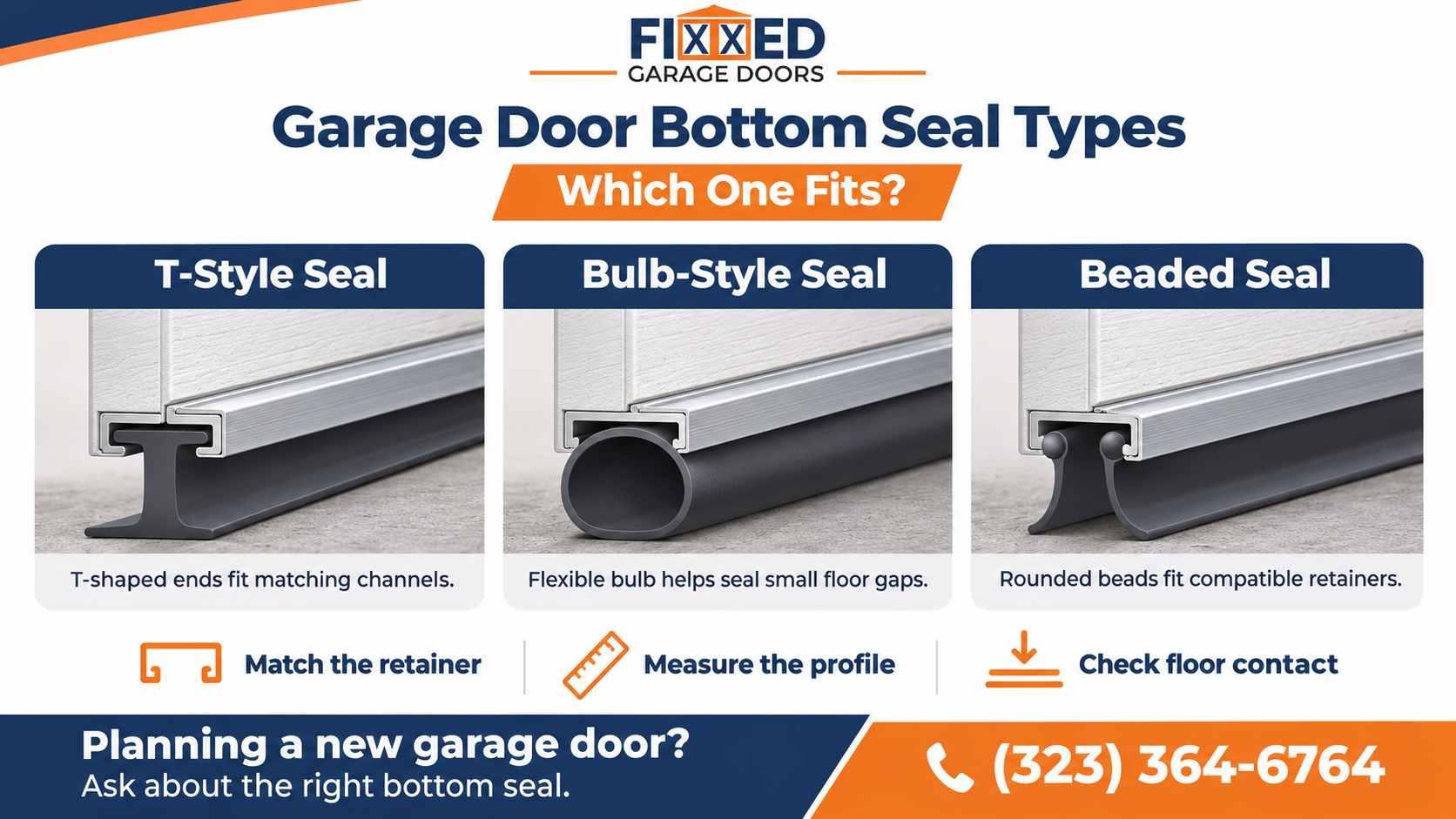
T-Style Garage Door Bottom Seal
A T-style seal has small T-shaped edges that slide into matching channels along the bottom of the garage door. Many sectional garage doors use this design because the channels hold the seal securely while allowing the flexible portion to press against the floor.
However, T-style attachments come in different sizes. A seal that looks similar to another may not fit the same channel.
Bulb-Style Garage Door Bottom Seal
A bulb-style seal has a rounded, hollow section that compresses when the door closes. This shape can help accommodate small variations in floor height because the flexible bulb changes shape under pressure.
Keep in mind that the bulb describes the part touching the floor, not necessarily how the seal attaches. Some bulb seals use T-shaped ends, while others use different attachment systems.
Beaded Garage Door Bottom Seal
A beaded seal uses rounded edges that fit into matching grooves in the retainer. Like T-style seals, beaded designs need the correct attachment dimensions. You cannot assume that a rounded bead will fit a channel designed for a T-shaped end.
For homeowners choosing a new garage door, the manufacturer can help identify which profile matches the door’s bottom hardware.
Step 2: Match the Seal to the Garage Door Seal Retainer
The garage door seal retainer is the strip or channel that holds the bottom seal in place. Many garage doors use aluminum retainers, although designs vary by manufacturer. Think of the retainer as the part that determines which seal can attach to the door.
For example, a door with two T-shaped channels needs a compatible seal with matching attachment ends. A beaded seal will not automatically fit those same channels.
Before selecting a garage door bottom seal, confirm:
- The garage door manufacturer and model
- The retainer’s attachment style
- The number of channels
- The required attachment dimensions
- The manufacturer’s recommended seal profile
Are you ordering a brand-new door? Ask the installer which retainer and seal come with it. That simple question can prevent compatibility problems later, especially if you want a different seal profile to accommodate your garage floor.
Step 3: Measure the Bottom Seal Correctly
You should never choose a garage door bottom weatherstrip based on appearance alone. A good fit starts with accurate measurements. Even if two seals look almost identical, their attachment ends and flexible sections may differ.
Measure the Garage Door Width
Start with the width of the door where the seal will attach. Measure across the bottom panel rather than assuming that the advertised door width gives you every dimension you need.
Your installer can use this measurement to determine the appropriate seal length and any cutting allowance recommended by the manufacturer.
Check the Seal Profile Dimensions
Next, confirm the size of the attachment ends. For T-style seals, this usually means checking the width of the T-shaped ends. For beaded seals, the manufacturer may specify the bead diameter.
Also, pay attention to the seal’s flexible width or height. These measurements affect how much material compresses between the door and floor. Do not guess from a product photo. Compare the manufacturer’s specifications with the retainer installed on your new door.
Measure the Garage Floor Gap
Finally, consider the space between the closed door and your garage floor. One area may have a smaller gap than another, especially if the concrete has settled or developed an uneven surface.
A correctly sized seal should compress enough to maintain contact without preventing the door from closing normally.
Step 4: Choose a Bottom Seal for an Uneven Garage Floor
What if your garage floor is not perfectly level? This is a common concern for homeowners with older driveways and garage floors. You may notice daylight beneath one corner of the door while the opposite side touches the concrete.
A flexible garage door bottom seal may help accommodate minor variations. However, the right choice depends on the size and shape of the gap.
| Garage Floor Condition | What to Consider |
|---|---|
| Smooth, level concrete | A standard compatible bottom seal may provide sufficient contact. |
| Small uneven areas | A flexible bulb or loop-style seal may accommodate minor differences. |
| Slight dips in the concrete | A seal with suitable compression may help reduce visible gaps. |
| Large or irregular gaps | The floor and door position need evaluation before selecting a seal. |
| Door touches one side but leaves a large gap on the other | Check door alignment and floor levels before choosing a thicker seal. |
A larger seal is not always the answer. If the concrete has a deep dip or the garage door sits unevenly, installing extra rubber may create pressure in other areas without solving the original problem. Have your installer assess the floor contact before selecting the final profile.
Step 5: Choose the Right Garage Door Rubber Seal Material
The material also matters when comparing bottom seals. Two common options include rubber and vinyl-based products.
Rubber Bottom Seals
Rubber seals, including certain EPDM rubber products, offer flexibility and resistance to weather exposure. They are worth considering when you want a seal that maintains contact through changing temperatures and regular garage door use.
Vinyl Bottom Seals
Vinyl seals are another common option. They come in different profiles and can provide effective sealing when properly matched to the door. However, flexibility and durability vary by product quality and formulation.
Rather than choosing only by material, compare the manufacturer’s specifications, expected exposure conditions, and compatibility with your door.
For Valley Village homeowners, the main priorities are reliable floor contact, resistance to outdoor exposure, and a seal that maintains its shape during everyday use.
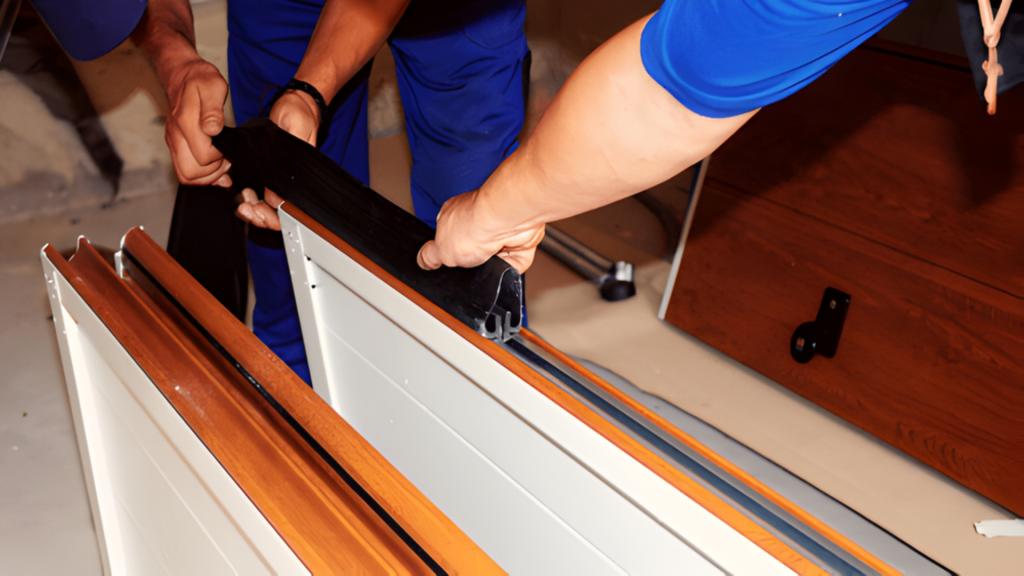
Step 6: Confirm the Bottom Seal Before Your New Garage Door Installation
The best time to discuss a garage door bottom seal is before the new door goes in. Why? Because you can confirm the retainer, seal profile, and floor contact while planning the door itself.
Ask your garage door installer these questions:
- Which bottom seal profile comes with this garage door? Make sure the seal matches the manufacturer’s retainer.
- Will the seal work with my garage floor? Discuss any dips, slopes, or uneven areas.
- What material does the manufacturer recommend? Compare rubber and vinyl options based on your needs.
- Will the seal make consistent contact across the full door width? Ask how the installer will assess the fit.
- Can I replace the seal later without changing the retainer? Understanding compatibility now makes future maintenance easier.
Fixxed Garage Doors can help you discuss these details while planning your garage door installation. If you want to understand how weatherstripping protects your garage beyond the bottom edge, read our related guide on the benefits of garage door weatherstripping.
Garage Door Bottom Seal FAQs
How do I know which bottom seal fits my garage door?
Check the door manufacturer, retainer type, and attachment dimensions. The safest approach is to match the seal with the manufacturer’s recommended specifications.
Can I use a thicker bottom seal to fix a garage floor gap?
Sometimes, a more flexible or appropriately sized seal can help with minor unevenness. However, a thicker seal cannot reliably correct major concrete dips or a misaligned door.
Are T-style and bulb-style garage door seals the same?
Not exactly. T-style describes an attachment shape, while bulb-style describes a rounded, compressible sealing section. A seal can have both features.
Does a new garage door include a bottom seal?
Many new garage doors include a manufacturer-specified bottom seal, but the exact design and materials depend on the model and installation package. Confirm what your quote includes.
Can the wrong bottom seal affect how the door closes?
Yes. An incompatible or oversized seal may prevent proper compression or interfere with the door reaching its intended closed position.
Planning a New Garage Door? Ask Fixxed Garage Doors About the Bottom Seal
A new garage door should look great and close properly against your garage floor. At Fixxed Garage Doors, we help homeowners in Valley Village and nearby Los Angeles communities explore garage door styles, materials, and installation options.
Before your new door goes in, ask our team to recommend a garage door bottom seal that matches the door’s retainer and your garage floor conditions. Call (323) 364-6764 today to request a Free Estimate and discuss your new garage door installation with Fixxed Garage Doors.

Recent Comments