
When your garage door starts to close and suddenly opens again, it can feel confusing and annoying. You press the button again, and the same thing happens. The door may move a few inches, reach halfway, or almost touch the floor before reversing. If your garage door reverses closing, the opener is usually reacting to something it thinks is unsafe. Sometimes, the fix is simple. Other times, the problem comes from the sensors, tracks, rollers, opener settings, or the door itself.
Quick Summary
If your garage door reverses before closing, check the safety sensors first. Dirt, misalignment, sunlight, or a small object near the sensor beam can stop the door from closing.
If the door reverses halfway, scrapes, shakes, or feels heavy, stop testing it. The problem may be mechanical and should be checked by a garage door technician.
Garage Door Reverses Closing: Most Common Reasons
A garage door opener is designed to reverse when it senses danger. This is a safety feature, not just a glitch. The opener may think there is a person, pet, object, or resistance in the door’s path.
That is why the first step is not to force the door. Pressing the button over and over can strain the opener and make the issue worse.
The most common reasons include:
- Dirty or blocked safety sensors
- Misaligned photo-eye sensors
- Objects near the door opening
- Incorrect opener limit settings
- Bent tracks or worn rollers
- Door balance problems
- Weak or damaged opener parts
Once you know where the reversal happens, it becomes easier to narrow down the cause.
Garage Door Reverses Closing Because of Dirty Sensors
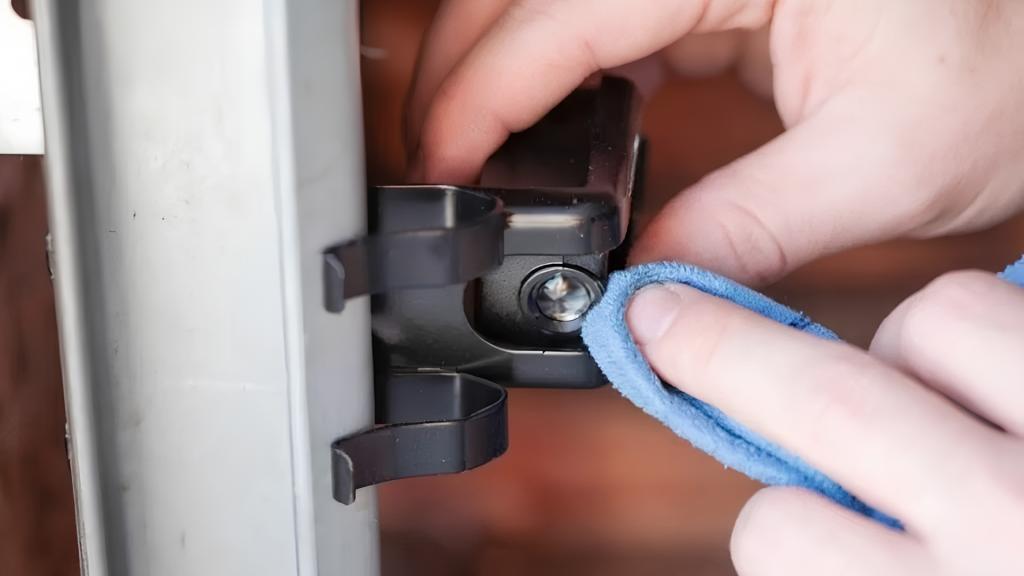
Safety sensors sit near the bottom of the garage door tracks. They face each other and create an invisible beam across the opening. If the beam is blocked, the opener will stop the door from closing.
This is the most common reason a door reverses right away.
Check for:
- Dust on the sensor lenses
- Leaves or small debris near the sensor
- Storage boxes close to the beam
- Spider webs around the sensor
- A trash bin, bike, or tool in the way
Wipe the lenses with a soft cloth. Then, make sure nothing is blocking the beam. After that, test the door again from a safe distance.
Garage Door Reverses Closing Because Sensors Are Misaligned
If the sensors are not pointing directly at each other, the opener may think the path is blocked. This can happen if a sensor gets bumped by a foot, broom, box, or garden tool.
Look at the sensor lights. Many sensors show a steady light when aligned. If one light blinks or turns off, alignment may be the issue.
You can gently adjust the sensor until both lights stay steady. Do not pull on the wires. Also, do not remove the sensor from the bracket unless you know how to secure it again.
If the lights will not stay steady, the sensor may have wiring damage or may need replacement.
Garage Door Reverses Closing Because Something Is in the Track
Sometimes, the problem is not the sensor. The door may reverse because it meets resistance while moving down.
Check the tracks for:
- Small rocks
- Loose screws
- Bent track sections
- Dirt buildup
- Damaged rollers
- Items leaning against the track
A garage door should move smoothly. If it scrapes or jerks, the opener may reverse to protect the system. Clear loose debris if you can do it safely. However, do not try to bend tracks back into place yourself.
Track and roller problems can affect the weight and movement of the full door. A wrong adjustment can make the door unstable.
The chart below highlights some of the most common reasons a garage door may reverse during closing. It outlines typical symptoms, likely causes, safe troubleshooting steps you can try, and signs that professional service may be needed.
| Symptom | Possible Cause | First Check |
|---|---|---|
| Reverses immediately | Sensor blockage | Clean and inspect sensors |
| Reverses halfway | Track or roller issue | Look for debris or damage |
| Touches floor then opens | Limit setting problem | Review opener settings |
| Won’t close with remote | Sensor or remote issue | Test the wall button |
Safe Troubleshooting Steps Homeowners Can Try
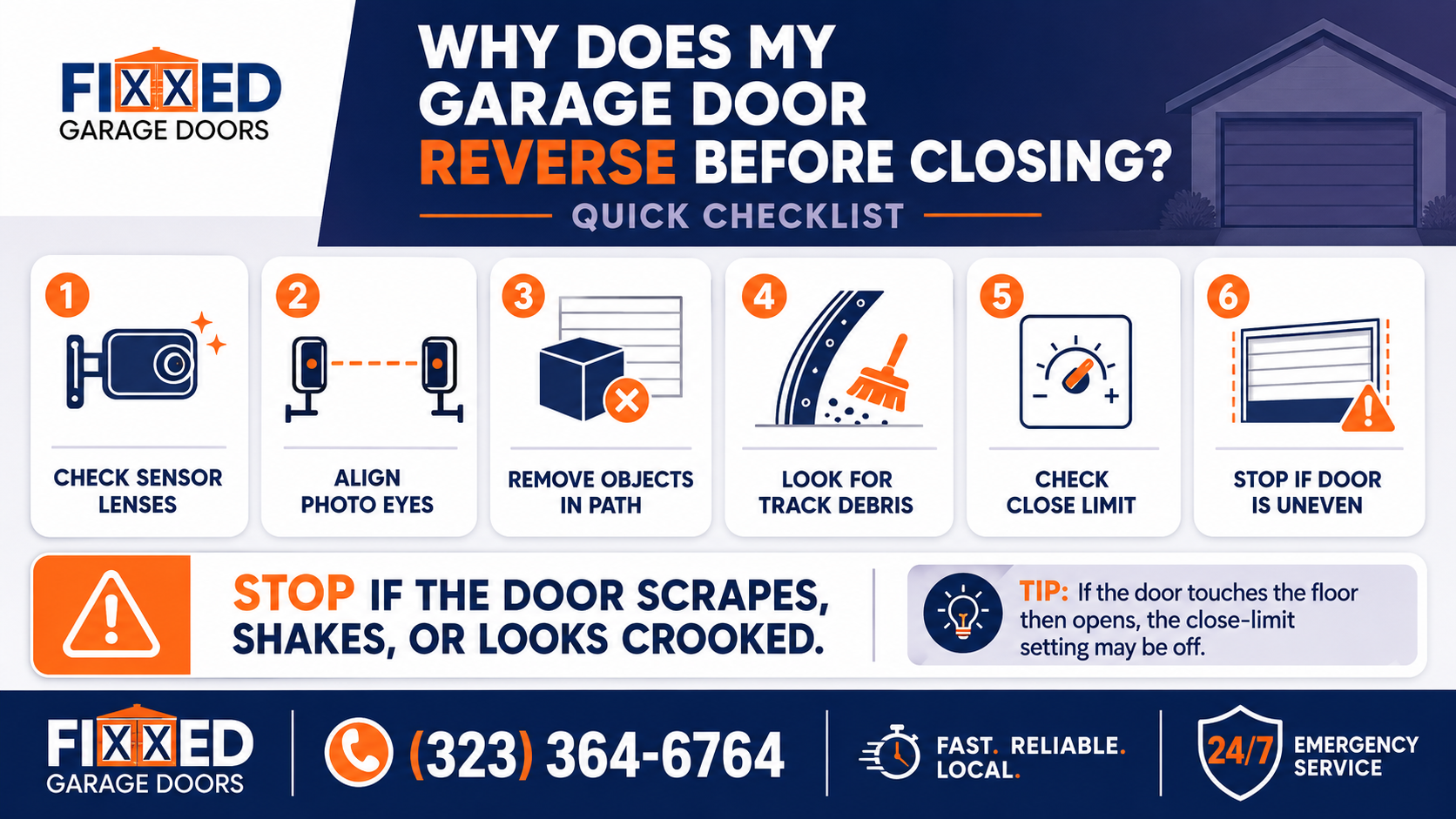
Before calling for an emergency garage door service, try these simple checks. They are safe and can solve many minor closing issues:
- Check the door path. Look for anything under the door or near the sensor beam.
- Clean the safety sensors. Use a soft cloth to remove dust, dirt, or spider webs.
- Watch the sensor lights. If one light blinks, dims, or turns off, the sensors may not be aligned.
- Test the wall button. If the wall button works but the remote does not, the remote may be the issue.
- Look at the tracks. Check for debris, loose hardware, or visible bends.
- Listen while the door moves. Grinding, scraping, or popping sounds may point to a mechanical issue.
- Stop if the door looks uneven. A crooked door can be unsafe. Do not keep testing it.
These steps can help you explain the problem clearly if you need to call a certified technician.
What to Do If the Garage Door Touches the Floor Then Opens
If the door reaches the floor and then reverses, the opener may think the floor is an obstruction. This can happen when the close-limit setting is off.
The close limit tells the opener how far the door should travel before stopping. If it is set too far, the door may press into the floor and reverse.
Some opener models allow small limit adjustments. However, every opener is different. Check your owner’s manual before changing anything. If you adjust the limit too much, the door may not seal correctly or may press too hard against the floor.
If the adjustment does not hold, call a garage door expert near me.
What to Do If the Garage Door Reverses Halfway
When the door reverses halfway, there may be resistance in the system. The door may be dragging because of a track issue, worn roller, weak spring, or opener force problem.
Do not increase the force setting just to make the door close. That can hide the real problem and create a safety risk.
Instead, look for signs like:
- The door shakes while moving
- One side looks lower
- The opener sounds strained
- The rollers wobble
- The track looks bent
- The door moves slower than usual
If you see these signs, the issue is likely more than a simple sensor problem. While some homeowners try resetting the opener first, a reset only helps in specific situations. If you are unsure whether that step applies to your situation, read our guide on how to reset a garage door opener before making additional adjustments.
When a Garage Door Opener Reset Will Not Fix It
A reset may help with a remote, keypad, or opener glitch. But a reset will not fix a damaged garage door system.
Do not keep trying to reset or adjust the opener if:
- The spring is broken
- The cable is loose or frayed
- The door is off track
- The door is crooked
- The opener rail bends
- The motor hums but the door does not move
- The door feels too heavy
These are repair issues, not reset issues. Your opener is not designed to force a damaged door closed. If your garage door reverses closing after basic sensor checks, the safest next step is a full garage door opener inspection.
FAQs: Garage Door Reverses Closing
Why does my garage door close only when I hold the wall button?
This often points to a sensor issue. Some openers allow the door to close when you hold the wall button, but not with the remote, because the safety sensor signal is not reading correctly.
Can sunlight make my garage door reverse?
Yes. Direct sunlight can sometimes interfere with safety sensors, especially at certain times of day. If the problem happens only in the morning or afternoon, sunlight may be affecting the sensor beam.
Why does my garage door reverse only at night?
Nighttime reversing can happen because of moisture on the sensors, cooler metal movement, weak sensor wiring, or lighting changes near the garage. If it happens often, have the sensors and opener checked.
Can a weak opener motor cause the door to reverse?
Yes. If the motor struggles to move the door, the opener may stop and reverse. However, the door itself may be the real reason the motor is struggling. Springs, rollers, and tracks should be inspected.
Is it safe to disconnect the opener and close the door manually?
Only do this if the door is balanced, on track, and safe to move. If the door is crooked, heavy, or stuck, do not pull the emergency release. The door may drop or move suddenly.
Conclusion
When a garage door reverses before closing, the first thing to check is the safety sensor system. Many problems come from dirt, misalignment, sunlight, or small obstructions. These issues are often simple to spot and may be easy to fix.
However, if the door reverses halfway, scrapes, shakes, or looks uneven, the problem may be mechanical. At that point, forcing the opener can damage the motor, rollers, tracks, or cables. The safest choice is to stop using the door and get it inspected.
Call Fixxed Garage Doors for a Free Estimate
Need help with a garage door that will not stay closed? Call Fixxed Garage Doors at (323) 364-6764 today and ask for a Free Estimate. Our team can inspect the sensors, opener, tracks, rollers, and full door system to find the real cause and get your garage door closing safely again.

Recent Comments