
A noisy garage door can make every morning feel more stressful than it should. You press the button, and the door squeaks, rattles, scrapes, or grinds loud enough to wake the house. The good news is that many of these sounds have simple causes, and you can often quiet a noisy garage door quickly by starting with the safest checks first. Some noises come from dry hinges or loose hardware, while others can point to worn rollers, opener strain, or parts that need professional repair. The key is knowing what you can safely try and when to stop before the problem gets worse.
So where should you begin when your garage door starts making noise?
Start Here: Is the Noise Safe to Troubleshoot?
Before you grab lubricant or a wrench, listen to the sound and watch the door move. A garage door should move smoothly from fully closed to fully open. It should not shake, drag, slam, or lean to one side.
If the noise is a light squeak or rattle, you may be able to try basic maintenance. Meanwhile, if the sound is a loud bang, sharp pop, heavy grinding, or scraping, stop using the door. Those sounds can point to spring, cable, track, or opener problems.
Check these signs first:
- The door opens and closes fully.
- The door stays straight in the tracks.
- The opener does not strain badly.
- The door does not look crooked.
- The cables are not loose or hanging.
- The spring does not have a visible gap.
If anything looks unsafe, skip DIY steps and call an expert garage door technician. A garage door is heavy, and some parts hold strong tension.
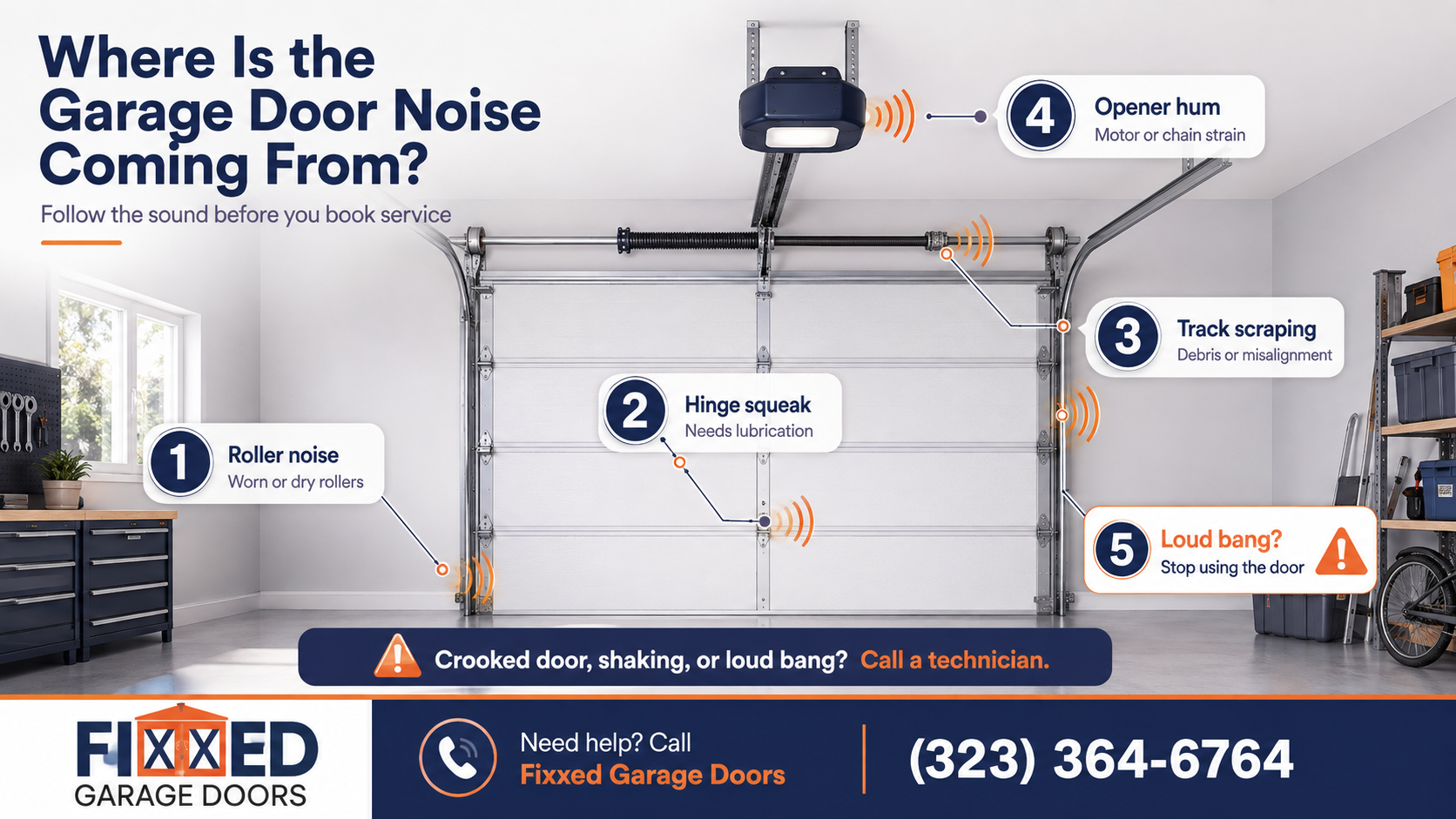
Step 1: Clean the Parts Before You Lubricate
Many homeowners spray lubricant right away, but that is not always the best first move. Dust, old grease, and dirt can make a garage door louder. If you spray over buildup, the mess can get worse.
Start by closing the door. Then wipe the visible hinges, roller stems, and metal areas with a dry cloth. Look along the tracks for leaves, small rocks, dust, or loose screws. You can remove light debris if it is easy to reach. However, do not pack lubricant inside the track. The rollers need to move through the track, but the track itself should stay clean. Too much product can attract more dirt and create rough movement later.
This simple cleaning step helps you see the real problem. It also helps lubrication work better.
Step 2: Lubricate the Right Garage Door Parts
Lubrication is one of the fastest ways to quiet noisy garage door movement when the problem comes from dry parts. Use a silicone-based spray or white lithium garage door lubricant. These products are better for garage door maintenance than general household oil.
Focus on these areas:
- Hinge pivot points
- Roller stems
- Metal bearings
- Spring area, only if safely reachable
- Opener rail, only if your manual allows it
Use a light amount. More is not always better. After applying lubricant, open and close the door once or twice. This helps the product move into the working parts.
Avoid using WD-40 as your main fix. It may reduce noise for a short time, but it is not a long-lasting garage door lubricant. It can also attract dirt as it dries.
If the door gets quieter after lubrication, you may have solved a dry-part issue. If the sound returns quickly, the part may be worn.
Step 3: Tighten Only Safe, Visible Garage Door Hardware
Rattling often comes from loose hardware. Every time the door opens or closes, vibration can loosen hinges, brackets, and bolts. Even one loose part can make the whole door sound louder.
Look for visible bolts on hinges and track brackets. If a bolt is easy to reach and not connected to a high-tension part, you can tighten it carefully. Do not over-tighten. The goal is to snug the hardware, not strip it.
Do not adjust the following garage door parts:
- Spring brackets
- Cables
- Bottom brackets
- High-tension hardware
- Anything that looks damaged or unstable
If the door rattles less after tightening safe hardware, that may have been the main issue. If the door still shakes or bangs, stop troubleshooting and schedule an expert garage door service.
Step 4: Check If the Rollers Are the Real Problem
If lubrication does not quiet noisy garage door sounds, the rollers may be the issue. Rollers help the door glide inside the tracks. When they wear out, the door may grind, wobble, or rumble during movement.
Look at the rollers while the door moves. Stay at a safe distance. Watch for cracked wheels, rust, flat spots, or rollers that do not spin smoothly.
Common roller warning signs include:
- Grinding near the tracks
- Wobbling movement
- Rough travel
- Squeaks that return fast
- Metal rollers that sound harsh
Nylon garage door rollers are usually quieter than old metal rollers. If your door has worn rollers, replacing them can make a big difference. A technician can also check if the track alignment and door balance are adding to the noise.
Step 5: Decide If the Noise Comes From the Opener
Sometimes the garage door is not the loudest part. The opener may be making the noise. This usually sounds like humming, buzzing, knocking, or grinding from the ceiling motor.
A loud opener can happen when the chain is loose, the motor is wearing out, or the opener is working too hard. However, the opener is not always the real cause. If the door is heavy, dry, or unbalanced, the opener has to work harder.
Before replacing the opener, check the door system first. A new opener will not fix worn rollers, weak springs, or track resistance.
Call for a garage door opener repair if:
- The opener hums but the door barely moves.
- The opener rail shakes.
- The chain or belt jumps.
- The motor grinds.
- The door stops halfway.
- The opener sounds strained every cycle.
Opener noise should not be ignored. If the motor is forcing the door to move, it can fail without much warning.

When a Noisy Garage Door Needs Repair, Not Maintenance
Some noise is more than a maintenance issue. If the sound feels sudden, loud, or unsafe, stop using the door. Quick fixes will not solve broken parts.
Use this table as a quick guide before you start working on your garage door. Some noises may only need simple maintenance, while others can point to parts that are unsafe to handle without a technician.
| Noise or Sign | Safe to Try First | Call Fixxed Garage Doors If |
|---|---|---|
| Light squeaking | Clean and lubricate hinges, rollers, and bearings | The squeak returns within a few days |
| Minor rattling | Check safe, visible bolts and hinges | The door shakes or hardware looks damaged |
| Grinding near tracks | Look for dirt, debris, or worn rollers | The grinding continues after lubrication |
| Scraping sound | Check for visible debris in the track area | The door rubs, sticks, or looks uneven |
| Loud humming opener | Watch if the door moves smoothly | The opener strains, shakes, or barely moves |
| Sudden bang or pop | Stop using the door | Call right away, especially if a spring or cable looks damaged |
| Door feels heavy | Do not force it | Schedule service before using the opener again |
These signs can point to a serious garage door repair issue. Springs and cables are not safe DIY parts. Tracks and heavy door movement can also be risky without the right tools.
Quiet Noisy Garage Door FAQs
Why is my garage door louder in the morning?
Cooler morning temperatures in Valley Village can make metal parts stiff, especially if they are dry or worn. If the noise fades later in the day, lubrication may help. If it keeps happening, the rollers or opener may need inspection.
Can weather make a garage door noisy?
Yes. Heat, cold, moisture, and dust can affect moving parts. Weather can dry out lubricant, cause minor expansion, or make old parts louder during operation.
How long should garage door lubrication last?
For many homes, lubrication can last several months. If the door gets noisy again within days or weeks, the issue may be worn rollers, loose hardware, or a mechanical problem.
Why is my new opener still loud?
A new opener can still sound loud if the garage door itself has problems. Worn rollers, poor balance, dry hinges, or track resistance can make even a newer opener work harder.
Can a noisy garage door damage the opener?
Yes. If the door is hard to move, the opener carries extra strain. Over time, that can wear down the motor, chain, belt, or internal gears.
A Quieter Garage Door Starts With the Right Fix
A noisy garage door usually starts as a small warning. Dry hinges, loose bolts, dirty tracks, and worn rollers can all make the door louder. Start with safe steps first. Clean the visible parts, lubricate the right areas, and check hardware you can reach safely.
However, do not force the door if it bangs, grinds, shakes, scrapes, or looks uneven. Those sounds can point to repair issues that need a trained technician.
If the noise continues or you are unsure what is causing it, it is best to have a professional take a closer look. A quick residential garage door inspection from Fixxed Garage Doors can prevent bigger damage and keep your garage door running safely and smoothly.
Get Professional Help to Quiet Noisy Garage Door Sounds
When your garage door starts squeaking, rattling, grinding, or getting unusually loud, it is often a sign of worn or failing components that should be inspected by a professional. Fixxed Garage Doors provides expert diagnostics and repair backed by hands-on experience with all major garage door systems.
Call (323) 364-6764 today to schedule your Free Estimate. Our certified technicians will thoroughly evaluate your rollers, hinges, tracks, opener, and overall system to identify the issue and restore smooth, quiet, and reliable operation.

Recent Comments