
A shaking garage door can make any homeowner feel uneasy. One day, the door opens like normal. The next, it jerks, rattles, shakes, or sounds like it may come off track. That is not something to ignore. A proper garage door shaking fix can protect your door, opener, vehicle, and family from bigger problems. In many cases, the shaking starts small because one part is worn, loose, bent, or out of line. However, if the issue keeps going, the damage can spread fast. The good news is that most shaking garage door problems can be found and repaired before the door fails completely.
Garage Door Shaking Fix Summary
A shaking or jerking garage door is often caused by worn rollers, loose hardware, misaligned tracks, damaged cables, weak springs, or opener strain.
Start with safe visual checks, but avoid touching springs, cables, or track repairs yourself.
If the door feels heavy, uneven, loud, or unsafe, call Fixxed Garage Doors for professional repair.
Garage Door Shaking Fix Cost and Timeline
| Problem | Common Cause | Best Solution | Cost Level | Timeline |
|---|---|---|---|---|
| Door shakes while moving | Worn rollers | Replace damaged rollers | Low to moderate | Often same day |
| Door jerks on one side | Track alignment issue | Professional track adjustment | Moderate | Same visit after inspection |
| Door bangs or snaps | Spring or cable problem | Call a technician | Moderate to higher | Urgent service needed |
| Door vibrates near the opener | Motor strain or opener issue | Opener inspection or repair | Moderate | Same day when possible |
| Door rattles loudly | Loose hinges or hardware | Tighten or replace worn parts | Low to moderate | Often quick repair |
Garage Door Shaking Fix: Why Your Door Starts Shaking
A garage door is heavy, but it should still move smoothly. When it shakes, something is interrupting that movement. The problem may come from the rollers, tracks, hinges, springs, cables, opener, or even the door panels.
Sometimes, homeowners hear the noise first. Other times, they see the door wobble as it opens or closes. Either way, the door is giving you a warning. It is asking for attention before one small issue becomes a broken system.
A jerking garage door can also put stress on the opener. If the opener keeps pulling against a stuck or unbalanced door, the motor may wear out faster. That is why a quick inspection matters.
Garage Door Shaking Fix for Worn Rollers
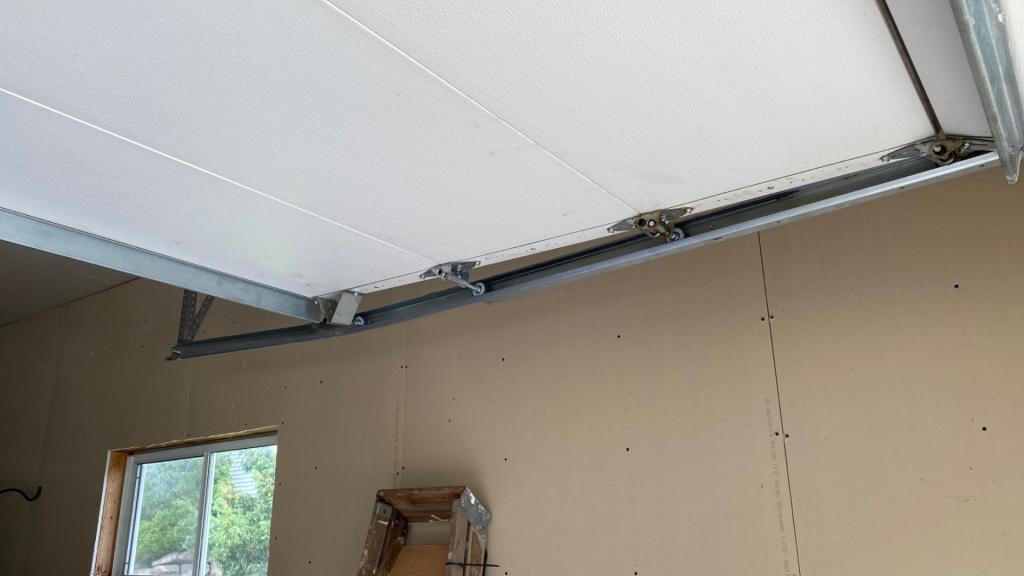
Rollers help the door glide inside the tracks. When they wear out, crack, bend, or lose smooth movement, the door can shake. You may hear grinding, squeaking, or popping sounds as the door moves.
Old rollers can also make the opener work harder. Instead of smooth travel, the door drags along the track. This creates vibration and uneven movement.
If the rollers look chipped, loose, or rusty, they may need replacement. This is a common garage door repair and can make the door feel much quieter and smoother.
Garage Door Shaking Fix for Misaligned Tracks
Garage door tracks guide the full weight and movement of the door. When a track bends or shifts, the rollers cannot move evenly. As a result, the door may jerk, shake, or look crooked.
You may notice one side of the door moving faster than the other. You may also see gaps between the rollers and the track. In some cases, the door may rub, scrape, or stop halfway.
Do not force the door if it looks off track. Forcing it can bend panels, damage cables, or make the door fall out of position. A technician can check the track, brackets, rollers, and door balance safely.
Why Springs and Cables Can Make the Door Jerk
Springs and cables carry much of the door’s weight. When they work well, the door feels balanced. When they fail, the door may feel heavy, uneven, or jumpy.
A weak spring can make the opener struggle. A damaged cable can cause one side of the door to lift unevenly. Both problems can create shaking and jerking.
These parts are under high tension. That means they can be dangerous to repair without the right tools and training. If you see a loose cable, broken spring, or crooked door, stop using the door and call a professional.
Garage Door Shaking Fix and Opener Problems
Sometimes, the door is not the only issue. The garage door opener may also be part of the problem. If the opener motor strains, the chain or belt is loose, or the travel settings are off, the door may move in a rough way.
Watch for these signs:
- The opener hums but struggles.
- The door starts and stops.
- The chain or belt shakes.
- The door reverses for no clear reason.
- The opener makes grinding sounds.
However, the opener should not be blamed too quickly. Many opener problems start because the door itself is too hard to move. A trained technician will usually test the door balance first before recommending opener repair or replacement.
Safe Checks Before You Book a Garage Door Repair
You can do a few safe checks before calling for service. These checks help you explain the issue better, but they should not replace a professional inspection.
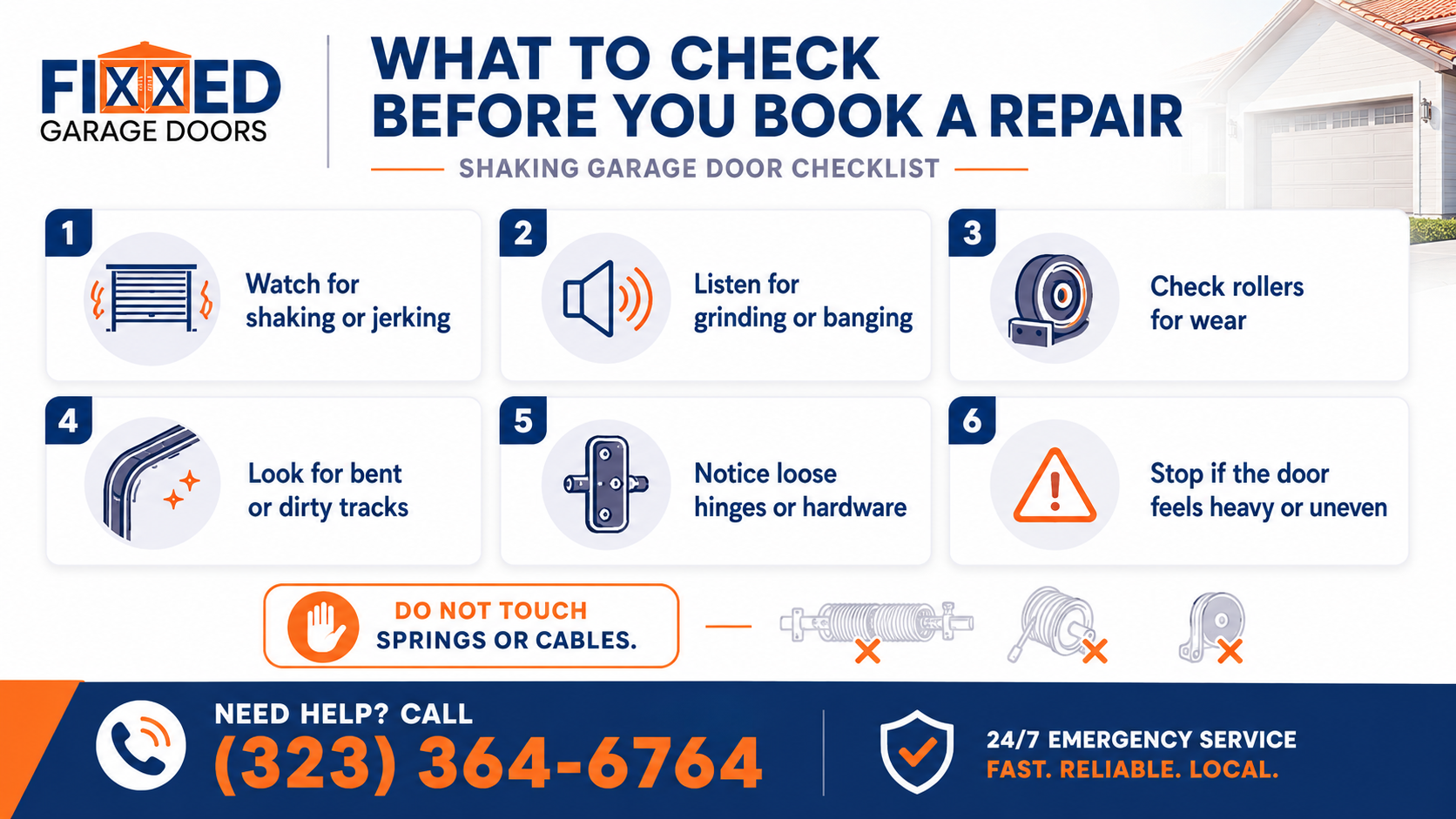
- Watch the door from a safe distance. Look for shaking, uneven movement, or one side lifting faster.
- Listen for the type of noise. Grinding may point to rollers. Banging may point to hardware, springs, or cables.
- Check for loose visible hardware. Look at hinges and brackets, but do not adjust spring or cable parts.
- Look at the tracks. Check for visible bends, gaps, or debris.
- Test the door only if it feels safe. If the door is stuck, crooked, or very heavy, do not force it.
Avoid DIY work on springs, cables, track realignment, or opener wiring. These repairs can be risky. A fast service call is much safer than an injury or a full door replacement. Call Fixxed Garage Doors now for fast garage door repairs in Valley Village, CA.
Garage Door Shaking Fix FAQ
Why does my garage door shake more during cold weather?
Cold weather can make metal parts contract and reduce smooth movement. Grease can also thicken, which may make the door feel stiff or shaky. If the shaking happens more on cold mornings or at night, the system may need proper maintenance, adjustment, or a full inspection.
Can poor lubrication make a garage door shake?
Yes. Dry hinges, rollers, and bearings can create friction. When the parts cannot move smoothly, the door may shake, squeak, or drag during operation. However, lubrication will not fix damaged parts. If the noise stays after basic maintenance, schedule a professional garage door inspection.
Why does my garage door shake after hitting something?
Even a small impact can affect how the door moves. A trash bin, bike, tool, or vehicle bump can shift parts slightly out of place. If the door starts shaking after contact, stop using it until it is checked. Small damage can become worse with each cycle.
Can strong wind make my garage door shake?
Yes, strong wind in Valley Village can make a garage door move or vibrate, especially if the door is older, wide, lightweight, or already loose in some areas. If the door only shakes during windy weather, it may still need reinforcement or a hardware inspection.
Why does my garage door shake after sitting unused for a while?
A garage door that has not been used for days or weeks may shake because parts became dry, stiff, or slightly stuck. Dust, moisture, and lack of movement can affect smooth operation. If the shaking continues after a few cycles, do not keep forcing it.
Conclusion
A shaking or jerking garage door is your door’s way of telling you something is wrong. It may start as a small sound or light vibration, but it can turn into a bigger repair if the problem is ignored. The safest move is to have the full system checked before the door gets stuck, damages the opener, or becomes unsafe to use.
With the right garage door shaking fix, your door can move smoothly again and feel more reliable every time you come and go.
Call Fixxed Garage Doors for a Free Estimate
Need help with a shaking, jerking, or noisy garage door? Call Fixxed Garage Doors at (323) 364-6764 today and ask for a Free Estimate. Our team can inspect the problem, explain the best repair option, and help get your garage door working safely again.

Recent Comments